

How Rock and Aggregate Support the World’s Tallest Buildings
November 4, 2025
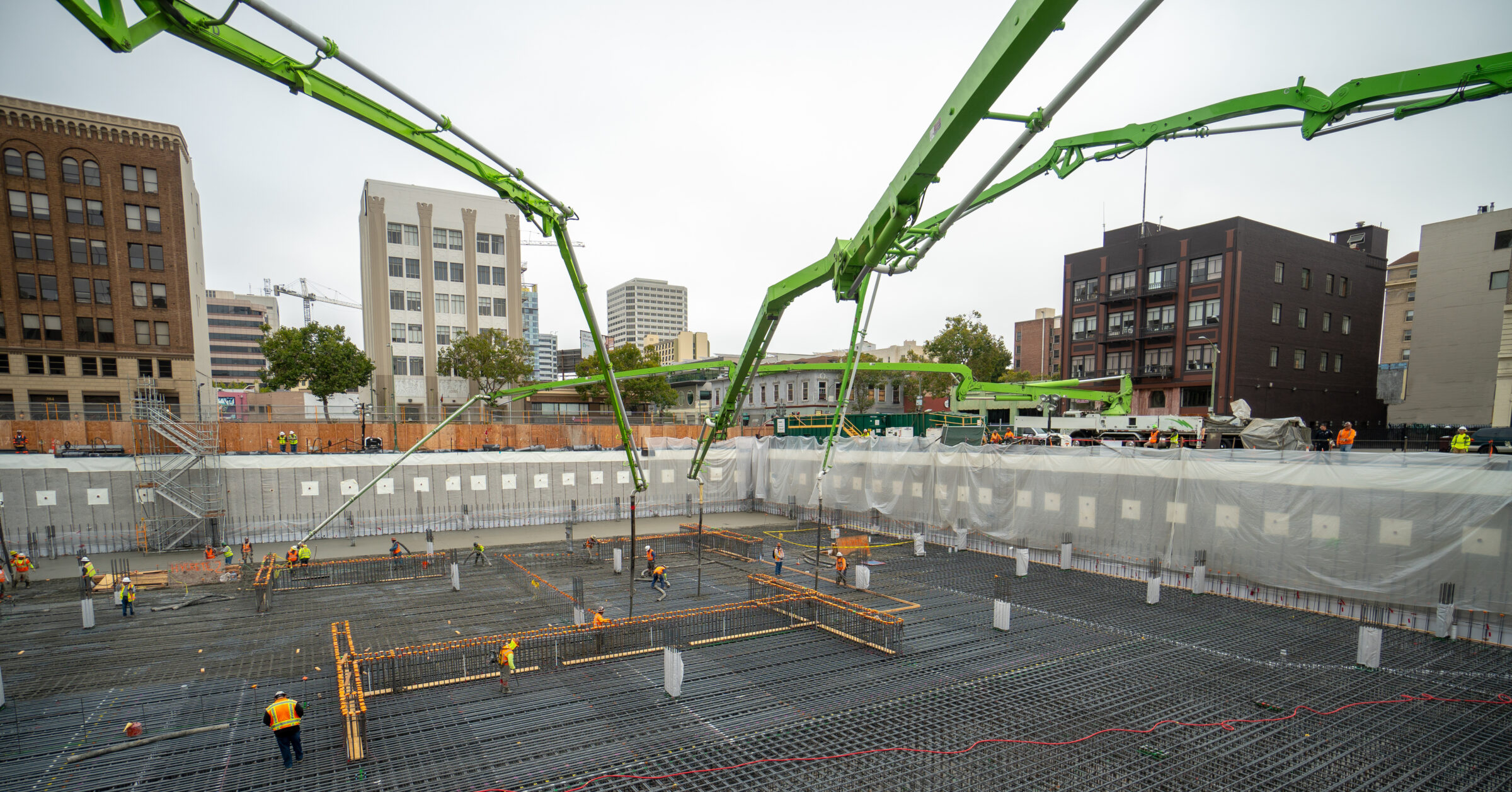
Today’s architectural landmarks stand as proof of what precision engineering can achieve. Behind every towering structure is a foundation built on rock and aggregate, materials that define the balance between strength, stability, and design. Beneath the surface, these elements distribute weight, manage stress, and create the uniform support required for structures that reach extraordinary heights. Their role extends well beyond the foundation, influencing how each tier above remains steady and aligned. In the world’s tallest buildings, rock and aggregate form the groundwork of progress, turning architectural ambition into enduring achievement.
Building Stability from the Ground Up
Every large structure begins with a foundation designed to transfer immense loads safely into the earth. Aggregates, in the form of crushed stone, gravel, and sand, create dense, load-bearing layers that anchor reinforced concrete and steel systems. This subbase must be carefully graded and compacted to prevent settlement and ensure uniform support across the structure’s footprint. In combination with concrete mixes optimized for compression, aggregates provide the rigidity and cohesion required to resist the shifting forces that occur deep below the surface.
The success of this foundation relies heavily on the quality and gradation of the rock materials used. Coarse aggregates contribute to strength and load distribution, while finer particles fill voids to enhance density and limit movement. This precise balance creates a stable platform capable of supporting vertical loads that measure in millions of pounds. It is this union of geological strength and engineering precision that allows skyscrapers to stand secure even as wind and gravity test their endurance.
Enhancing Concrete Strength and Longevity
As buildings ascend higher, the concrete that forms their cores and columns must perform under increasing stress. Aggregates play a crucial role in that performance. High-strength concrete formulations often include crushed stone with angular surfaces, which bond tightly to cement paste and increase compressive strength. The mineral composition of these aggregates also affects durability, helping concrete withstand temperature fluctuations, chemical exposure, and moisture over time.
Engineers select aggregate types based on both mechanical and thermal properties. For example, dense limestone or granite aggregates are preferred for their structural reliability, while lightweight aggregates made from expanded shale or clay are used in upper floors to reduce overall mass without compromising strength. This combination of heavy and light materials creates efficiency within the building’s framework, optimizing how each floor supports the one above it.
Managing Pressure Through Geotechnical Precision
The interaction between rock, soil, and structural load is one of the most critical aspects of vertical engineering. Deep foundations, often built with drilled shafts or piles, extend through layers of aggregate and natural rock until they reach a load-bearing stratum. The stability of these systems depends on how the aggregate bedding and concrete interface with the surrounding geology. Properly compacted aggregate beneath foundation mats acts as a drainage layer and a stabilizer, reducing hydrostatic pressure and preventing uneven settlement.
In cities where space is limited, advanced geotechnical design often integrates crushed stone columns or aggregate piers beneath structural foundations. These installations improve soil density and shear strength, allowing high-rise structures to be built safely on challenging sites. The controlled placement of aggregates in these systems reflects a growing trend toward engineered ground improvement, an innovation that allows architects to reach greater heights while maintaining structural confidence.
Sustaining the Skyline with Material Innovation
The evolution of aggregates in such designs continues to expand as material science advances. Recycled aggregates are being introduced into non-structural concrete elements, contributing to sustainability goals without sacrificing performance. High-performance mixes are now formulated to reduce shrinkage and improve early strength, supported by aggregates selected for consistency and compatibility. Even the sourcing process has become more refined, with quarry operations focusing on uniform gradation and clean, durable rock that meets the exacting standards of modern design codes.
From the ground beneath to the highest level above, every phase of vertical building construction depends on the integrity of rock and aggregate. Their combined strength not only supports physical weight but also sustains the architectural aspirations that shape modern cities. In each foundation and concrete column, these materials embody the balance between natural endurance and human innovation, a partnership that continues to define how the tallest buildings in the world stand secure against both time and gravity.