

What Makes Good Arena Sand? A Guide for Equestrian Facilities and Property Owners in Central Utah
June 1, 2026
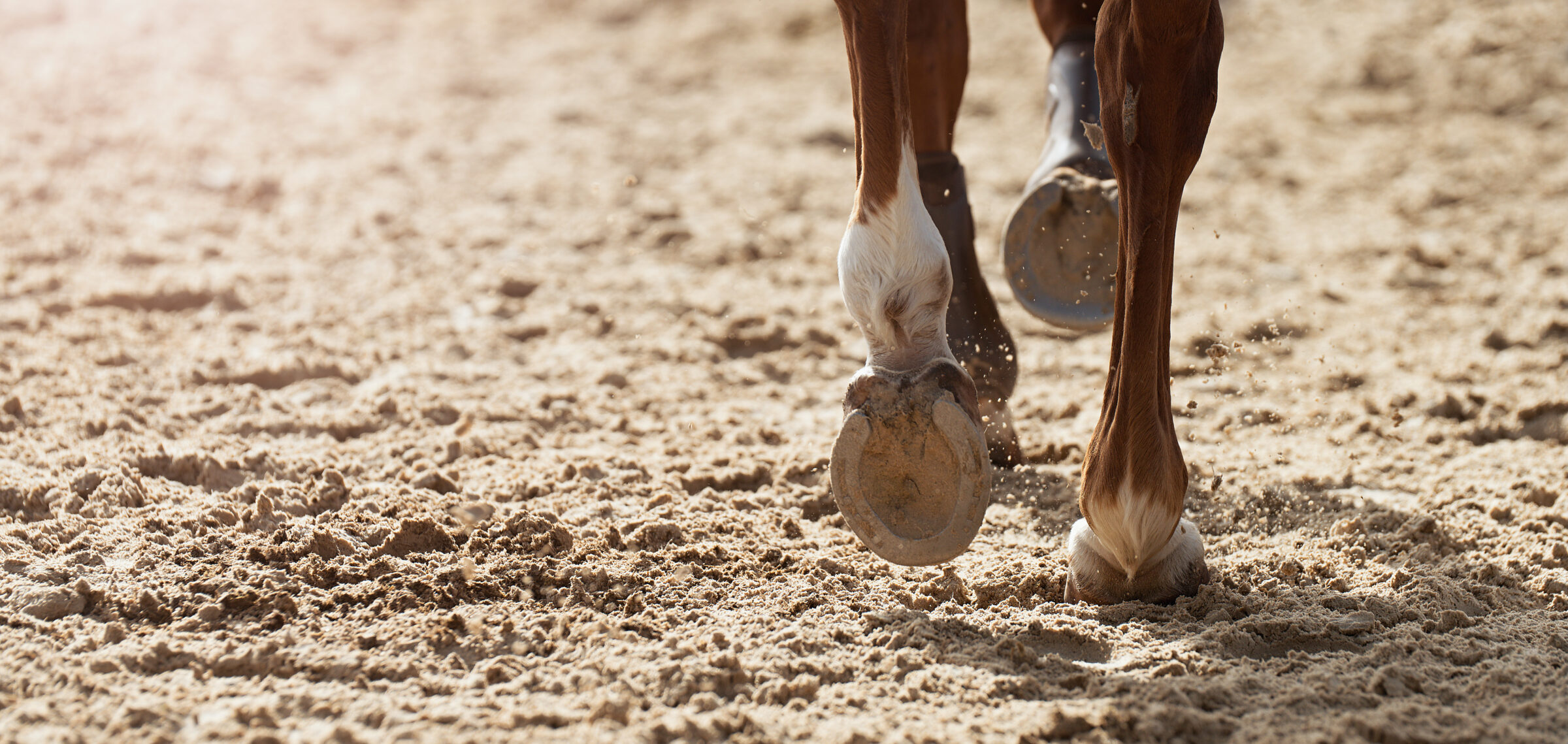
Good arena sand does more than fill a riding space. It affects traction, cushioning, drainage, dust control, and how consistently the footing holds up under daily use. For equestrian facilities and property owners in Central Utah, choosing the right sand means looking beyond generic material and focusing on particle shape, gradation, cleanliness, and performance in dry summers and freeze-thaw conditions.
Particle Shape and Gradation Set the Tone
Sub-angular grains interlock under load while still releasing during push-off, which is the mechanical behavior most equine disciplines look for in a footing. Round, river-washed grains roll past each other and create a loose, deep surface that drains energy from the horse and pulls on tendon and ligament structures. Sharp, fully crushed sand binds too tightly, packs hard, and concusses the limb on landing. A middle ground, where grains carry small flat faces but retain enough irregularity to grip, gives the footing both cushion and rebound.
Gradation, meaning the spread of particle sizes inside a single sand sample, controls how the surface holds together. A well-graded arena sand carries a blend of coarse to fine particles so smaller fragments fill voids between the larger ones, creating internal structure without compaction. Sand that runs too uniform, all one size, tends to shift sideways under torque and forms shallow channels along common riding lines. Inconsistent gradation also accelerates separation, where fines migrate downward and leave a coarse, unstable top layer behind.
Cleanliness and Mineral Composition
Hard, silica-rich grains resist crushing under repeated loading cycles, which extends the working profile of the arena floor before a top-up is needed. Lower-silica sands, often pulled from softer deposits, break down into dust quickly and shorten the working life of the surface. Washed sand removes the silt, clay, and organic fines that otherwise bind with moisture and produce slick patches or cement-like crusts after a freeze. Clean material at the time of placement extends the practical lifespan of the surface and reduces the volume of make-up sand required each season.
Moisture Behavior and Dust Control
Moisture retention separates a workable arena floor from a constant dust source, especially across the dry corridor running through Utah and Juab counties. A sand with a small fraction of angular fines, kept below the level that would cause compaction, holds water deeper into the day and reduces airborne particles during turnout and lessons. Excessive fines, however, choke drainage after snowmelt or summer storms and create soft, boggy zones near low spots. The target sits at enough fine content to retain moisture without sealing the surface to vertical water movement.
Depth, Base, and Placement
Between two and four inches of sand covers most general-riding setups, with dressage favoring the shallow end and jumping disciplines pushing deeper. Sand laid too thin exposes the base to direct hoof impact, which crushes the rock layer and creates dips along the rail. Excess depth forces the horse to work harder, increases strain on soft tissue, and lengthens recovery between sessions. A compacted, crowned base of road base or screened aggregate sits beneath the sand, sheds water toward the perimeter, and gives the footing a consistent platform underneath.
Placement matters as much as the material itself. Sand spread in a single dump and dragged out tends to leave thicker pockets in the center and thin spots near the rails, which then wear unevenly under traffic. A layered approach, where smaller lifts are dragged in succession, produces a more uniform top surface and reduces the chance of a horse stepping into a deep pocket mid-stride. After initial placement, regular dragging and watering keep the grain structure mixed and the moisture profile steady.
Matching the Sand to the Discipline
Different riding disciplines apply different forces to the same square inch of footing, and the sand spec should reflect that. Dressage and pleasure work favor a shallower, slightly firmer footing where the horse rolls through transitions without sinking. Reining and barrel racing demand a surface with more give for sliding stops and tight turns, often achieved through a touch more depth and slightly higher angular content. Jumping arenas need a footing that absorbs the landing without rebounding sharply, which usually points to a mid-depth profile with sub-angular grains and a steady moisture content.
Sourcing Locally for Load-to-Load Consistency
Load-to-load consistency in grain shape and gradation removes one of the bigger hidden variables in arena maintenance. Sand pulled from local pits often carries the composition that works well for equestrian footing, provided the material has been washed and screened to spec. Trucking sand from outside the region drives up cost per yard, lengthens delivery windows, and introduces variability between loads when material is blended at different plants. A regional materials supplier can also open the door to footing-grade blends rather than off-the-shelf concrete sand or playground sand.
For equestrian facilities and property owners across Central Utah, the right arena footing starts with a sand spec written to handle real load under regional weather conditions. Staker Parson Materials & Construction supplies washed sands and aggregate blends from local pits and can match material to arena type, ring size, and traffic level. Reach out to the aggregate dispatch team or request a quote to talk through footing options for the next build or seasonal refresh.