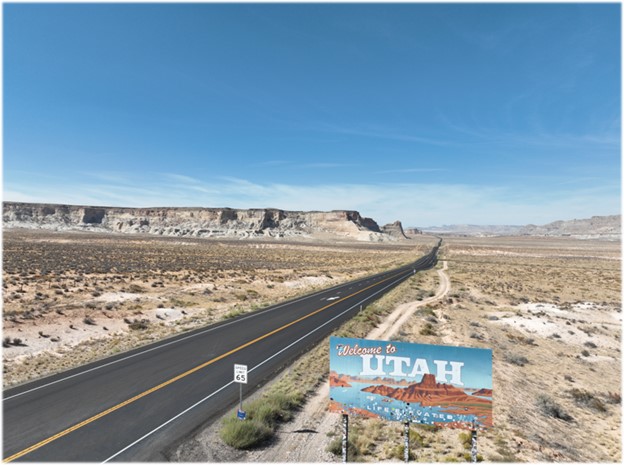
US-89; Arizona State Line to Buck Tank Draw
Company
Western Rock Products
Project Type
Aggregates
Asphalt
Asphalt Paving
Construction
Excavation
Location
Kane County
Owner: UDOT Region 4
General Contractor: Western Rock Products
Start Date: Spring 2024
Completion Date: Summer 2024
Subcontractors/Key Contractors:
- Jones & DeMille Engineering – Owner’s Representative & Quality Assurance
- CMT Engineering Laboratories – Structural Pavement Engineer
- American Traffic Services – Maintenance of Traffic
- Dustrol – Hot-In-Place
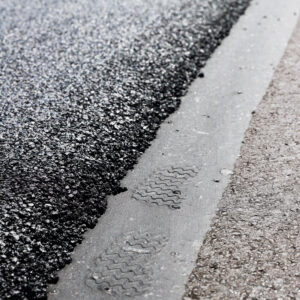
- Z&Z Asphalt – VRAM (joint band)
- Coughlin Company – Roto Mill
- Brown Brothers Construction – Shouldering
- Straight Stripe – Pavement Markings & Rumble Strips
Materials Used on Project and Quantities to Date:
- 177,000 square yards of 2” hot-in-place structural pavement recycle (HIR / MARS)
- 43,000 lineal feet of void reducing asphalt membrane (VRAM)
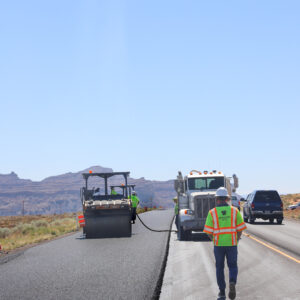
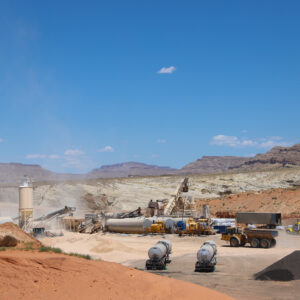
- 28,300 tons of 2” stone matrix asphalt surface course
Project Description:
Project Description:
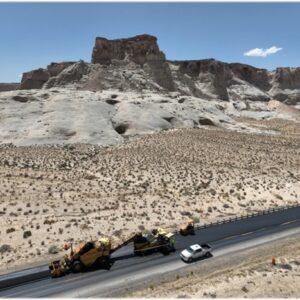
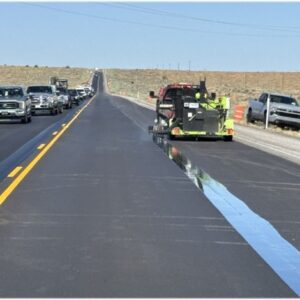
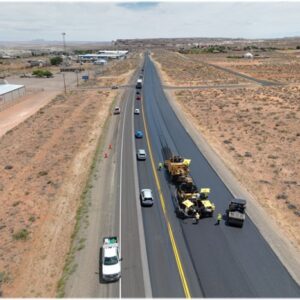
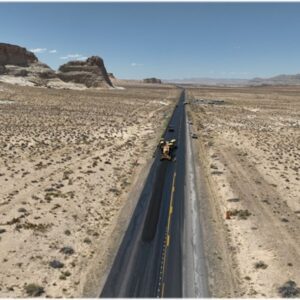
This 10-mile highway rehabilitation project on US-89 in Kane County plays a crucial role in connecting travelers to Big Water, UT, Lake Powell, Glen Canyon Dam, and Horseshoe Bend, which saw over 5 million visitors in 2023. The project scope included structural pavement recycling, a new asphalt surface course, improved shoulders, and key safety enhancements such as new guardrails, rumble strips, pavement markings, and guide signs. These improvements ensure a smoother and safer driving experience for both local traffic and visitors.
A challenge arose early in the project when mix design core sampling revealed high oil content in the existing pavement due to successive chip seal applications. This unexpected condition required a value engineering approach to adjust the milling process while minimizing cost and schedule impacts. By incorporating an oil credit and optimizing milling operations, the team successfully adapted the scope without disrupting the critical project timeline. Another challenge was fiber segregation in the stone matrix asphalt (SMA), a key factor in maintaining pavement quality. With careful mix management, the project team successfully placed all 17 paving lots to specification without requiring rework.
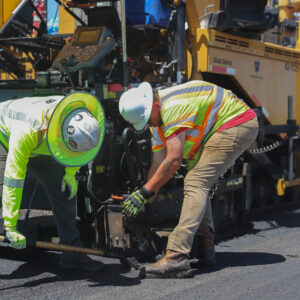
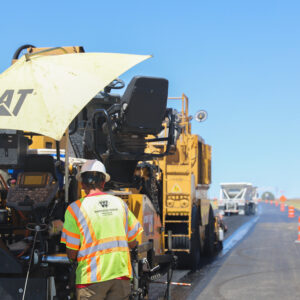
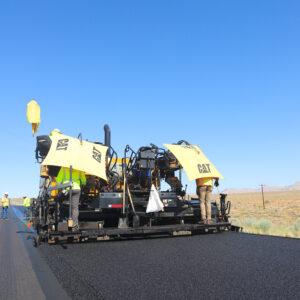
The project also introduced two significant innovations to enhance efficiency and durability. Hot-in-place recycling (MARS) was used to rehabilitate the existing pavement instead of traditional milling and overlay, reducing material costs, trucking needs, and environmental impact. This method provided substantial cost savings while also improving ride quality by eliminating stop-and-go paving operations. Additionally, VRAM was applied to the pavement joints to minimize permeability and extend pavement life, marking an important investment in long-term durability.
Safety remained a top priority throughout the project. With over 11,000 person-hours worked, the team achieved zero injuries and zero motorist claims. Strict site-specific safety training and controlled traffic management, including a pilot car system, helped ensure a smooth and secure work zone for both crews and the traveling public.
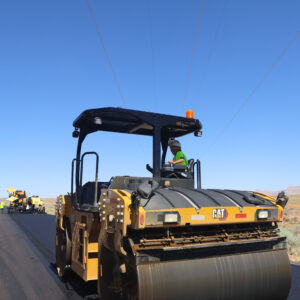
Quality performance was another key success, with the project achieving 53% of available compaction incentives and earning a Tier 2 pavement smoothness rating. The improved ride quality was supported by the continuous motion of the MARS process, which provided a seamless transition into the final SMA surface. The team also completed the project ahead of schedule, securing the maximum early completion incentive.
Ultimately, the US-89 project delivered a safer, smoother, and more durable highway, improving travel conditions for both Utah-bound and Arizona-bound motorists.